Campaign Zero’s Mapping Police Violence (MPV) has released its 2025 analysis, revealing the first decline in police killings in six years.
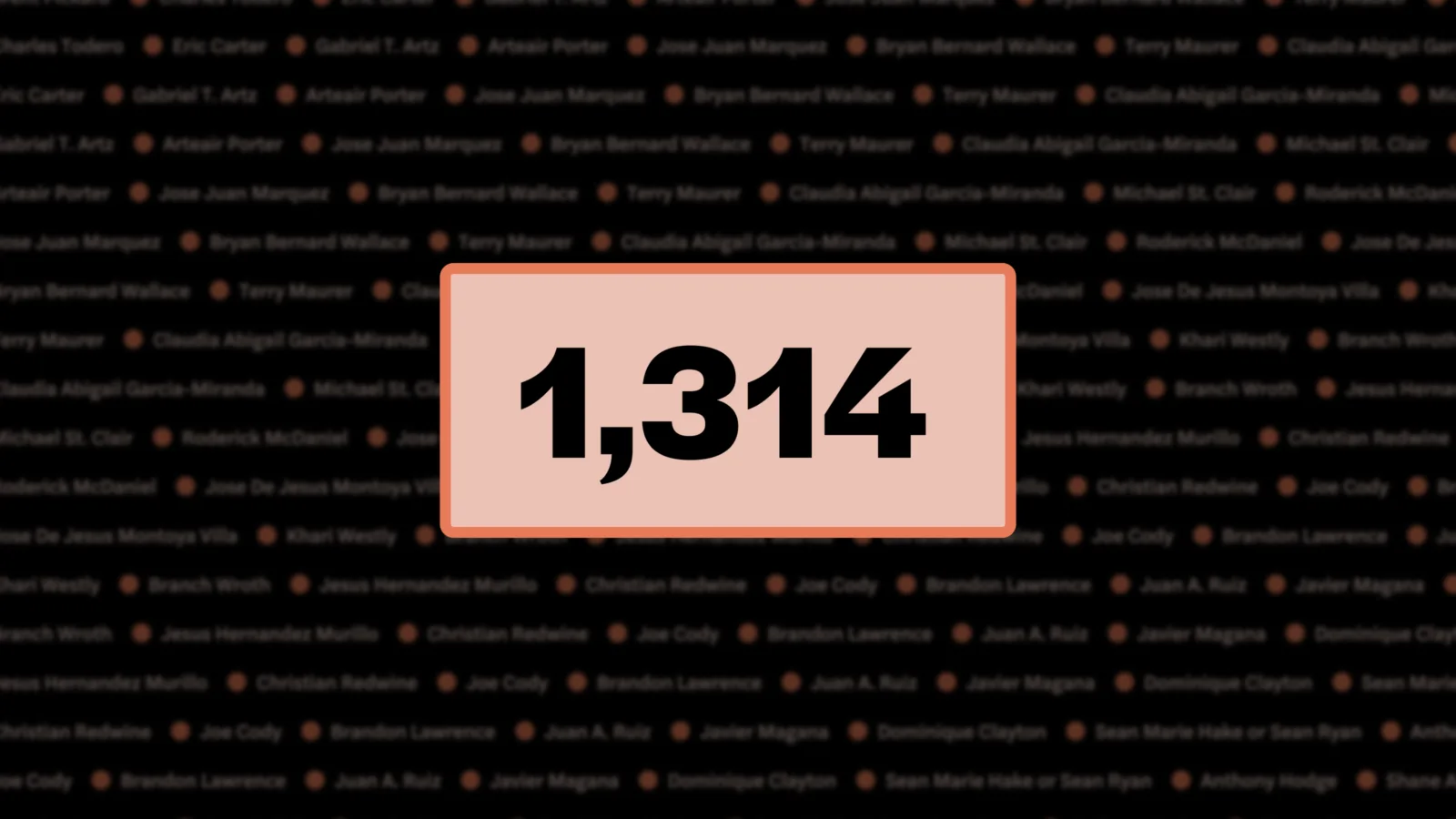
In 2025, police killed 1,314 people in the United States—a 5% decrease from 2024. While this marks meaningful progress, the scale of fatal police violence remains devastating, and new threats are emerging as federal agencies expand into unaccountable paramilitary forces and officials roll back successful reforms.
Key Findings
- First Decline in Six Years: 2025 saw the first year-over-year decline in police killings since 2019, with 1,314 people killed by law enforcement.
- Near-Daily Occurrence: There were only 6 days in 2025 when U.S. law enforcement did not kill someone. On average, police killed 3.6 people per day—one person every 6.67 hours.
- Increased Accountability: As a result of sustained pressure from activists, the rate of officers charged after a fatality has nearly doubled in the years since 2020.
Racial Disparities Persist
- Native Hawaiian & Pacific Islanders (NHPI) faced the highest racial disparity, being 5.5x more likely to be killed by police than White people.
- American Indian & Alaska Native (AIAN) individuals were 3.0x more likely to be killed.
- Black people were 2.6x more likely than White people to be killed by police.
- Hispanic people were 1.3x more likely to be killed.
- Asian people were 3.3x less likely than White people to be killed by police.
- Police violence decreased across all races and ethnicities in 2025, with the largest decreases among Native Hawaiian & Pacific Islander and Black victims.
Cities, States, & Agencies with the Largest Increases in Police Killings
- The District of Columbia saw the largest increase in police killings—a 98% increase compared to the average of the previous 12 years. DC rose from the 10th-highest rate on average to the third-highest rate in 2025. It was Washington DC’s worst year since records began in 2013.
- New Mexico had the highest per capita rate of police killings among all states (1.36 per 100,000 people).
- Orlando, FL had the highest per capita rate of police killings among large U.S. cities (2.81 per 100,000 people).
- The Jacksonville Sheriff’s Office saw more than a 400% increase in fatal police encounters in 2025. One of the victims was 14 years old.
Largest Decreases
- Rhode Island was the only state to record zero police killings, both in 2024 and 2025.
- New Jersey had the second-lowest rate in 2025 (0.08 per 100,000 people), a 48% decrease from its 12-year average.
- Long Beach, CA saw the most significant drop among cities, reducing police killings to zero after 39 deaths over the previous 12 years.
- 12 cities with populations over 250,000 recorded zero police killings in 2025, up from 10 cities in 2024.
Campaign Zero Statement
In 2025, fatal police violence declined for the first time in six years—clear evidence that sustained, long-term activism works. Police killed 1,314 people in the United States, a 5% decrease from 2024. In addition, our analyses show that officers who killed people were more often charged with crimes in recent years.
But new threats are emerging. Budget cuts affecting behavioral health services, community services, and alternative crisis response units could increase police interactions with the public and subsequent violence in the coming years. The majority of police killings follow a call for service; the more emergency calls that can be diverted to non-law-enforcement bodies, the more we can reduce the chances of police using fatal force against members of the public.
Our data highlights the persistent and disproportionate impact of police violence on Black, Indigenous, and other communities of color, as well as the wide variations in policing practices across states and municipalities. Cuts to services risk losing the progress we’ve made.
We remain committed to advancing solutions that move us toward a world beyond policing.
About the Data
Per our methodology, all incidents go through a multi-layered review process. The current total number of incidents in 2025 may increase in the coming months because some police killings and their circumstances are not reported until weeks or months later. To better understand the data generation process and methodology for the underlying data, please refer to our Data & Methodology.